
Why Some Finishes Always Look More Refined
You can look at two leather pieces, two upholstered panels, two fabricated goods made from similar materials, and one simply reads as more considered. More finished. More deliberate. The materials might be identical. The stitching might be equivalent. But something in the overall impression signals a different level of care.
That difference almost always traces back to the edges, the surfaces, and the tools used to address them.
The Edge Is Where Finish Either Lives or Dies
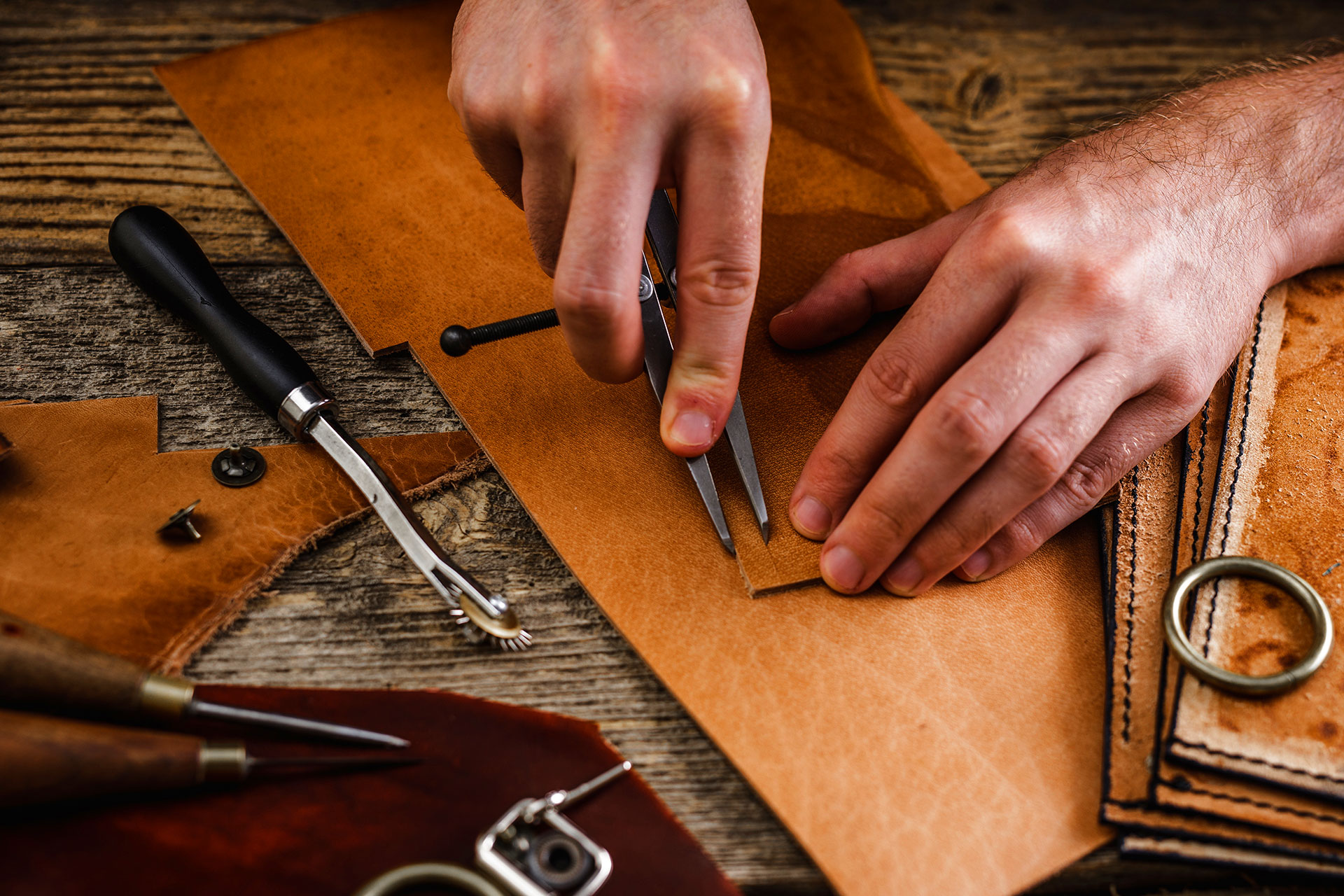
Raw cut leather has four faces. The grain side, the flesh side, and the two lateral edges created by the cut. Craftspeople spend considerable attention on the grain and flesh. The edges get less, and the omission shows.
An unaddressed edge absorbs moisture unevenly, frays at the fiber layer, and ages poorly. It also communicates something to anyone who handles the piece: that the maker stopped before the work was complete.
A beveled and burnished edge tells a different story. The bevel removes the sharp corner, softening the profile. The burnishing compresses and polishes the exposed fiber. Together, they produce an edge that holds its shape, accepts dye evenly, and looks intentional from every angle.
The tools that produce this result need to work in sequence and at quality. A cheap beveler that skips rather than cuts clean creates more work than it removes.
Surface Preparation Determines How Finish Behaves
Many craftspeople apply dye, finish, or sealant to leather that hasn’t been properly prepared. The results are inconsistent. Patches absorb more than the surrounding areas. Color pools at tool marks or surface scratches. The finish looks applied rather than integrated.
Surface preparation involves:
- Removing any oils or residue from the grain side before dyeing
- Lightly abrading areas where the surface has been compressed or burnished unintentionally
- Using a bone folder or slicker to consolidate the flesh side before applying any backing or lining
Each step requires a tool that performs without introducing new problems. A bone folder that drags creates surface marks. One that glides consolidates fiber evenly and leaves the surface genuinely ready.
What Consistent Depth Actually Produces
When you skive leather to reduce thickness at a seam, the quality of the taper determines how the finished seam sits. A well-executed skive produces a gradual, even reduction that creates a flat, barely perceptible join. A rough or inconsistent skive produces a seam that rises, or worse, that shows the edge of the reduction through the grain side as a slight ridge.
This is visible. Not always to untrained eyes immediately, but it registers. The piece looks slightly off without the viewer being able to name why.
Consistent depth across cuts, grooves, and reductions comes from tools that hold their setting across the full stroke. Not tools that creep, flex, or require constant correction.
Why Refined Finishes Feel Effortless
The paradox of excellent craft finishing is that the more work goes into it, the less visible that work appears. A beautifully beveled, burnished, and sealed edge doesn’t announce itself. It simply looks correct. Natural. Like the piece couldn’t have ended any other way.
That invisibility is the goal. And it arrives through tools precise enough, and materials consistent enough, to let the craftsperson’s intention reach the surface without interference.
Conclusion
Refined finishes are not accidents, and they don’t come from shortcuts. They come from understanding which steps matter, working through each one with the right tool, and letting that discipline accumulate into something that looks, to everyone else, like it came easily. The craft is in knowing that it didn’t, and doing it anyway.