Leather Crafting Ideas? From Beginner Keychains to Stunning Handmade Bags
“Whether you’re a seasoned artisan or a curious beginner, leather crafting ideas have a way of igniting creativity like few other hobbies can. Leather is one of the oldest and most versatile materials in human history, it’s durable, beautiful, and rewards patience and skill with stunning results. From wallets to wall art, the possibilities are genuinely endless. If you’ve been looking for a craft that blends function with artistry, leather crafting might just be your perfect match.
Why Leather Crafting Is Worth Your Time and Investment
Leather crafting isn’t just a hobby, it’s a skill that can grow into a passion, a side business, or a deeply satisfying creative outlet. Unlike trendy crafts that fade quickly, leatherwork has stood the test of centuries. The materials age beautifully, and the skills you develop are genuinely transferable across dozens of projects.
Beyond the aesthetic appeal, leather crafting offers real-world utility. Every item you create serves a purpose, whether it’s a belt, a bag, or a custom phone case. You’re not just making something pretty; you’re making something lasting.
The startup costs are manageable, and the learning curve, while present, is deeply rewarding. With the right tools and a little guidance, even beginners can produce professional-looking results within their first few projects.
Essential Tools Every Leather Crafter Needs
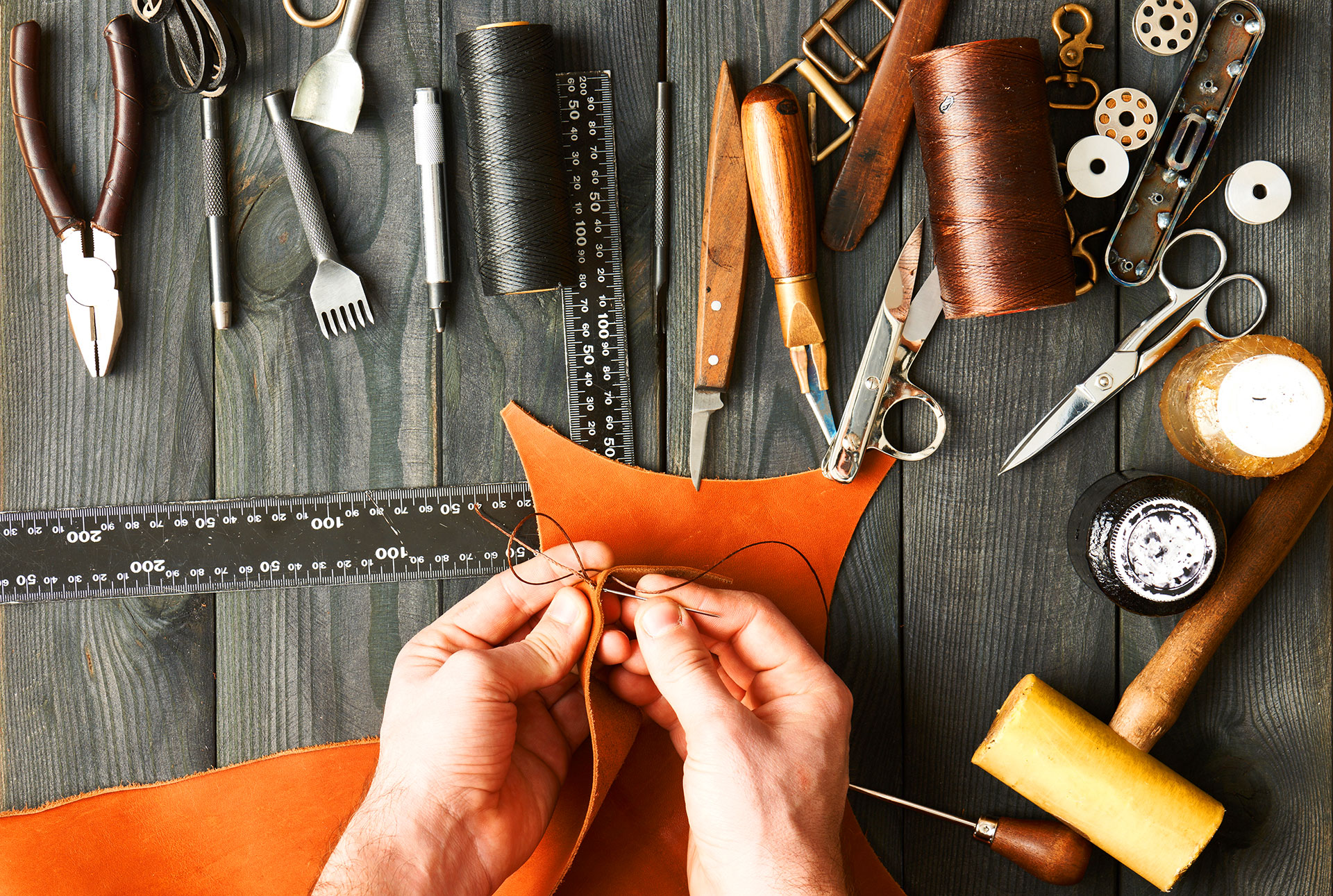
Before diving into specific leather crafting ideas, it’s important to understand your toolkit. The quality of your tools will directly impact the quality of your work, and more importantly, your enjoyment of the craft.
Cutting Tools
A sharp, reliable cutting tool is non-negotiable. Rotary cutters, swivel knives, and strap cutters each serve different purposes. Investing in high-quality cutting tools means cleaner edges, less frustration, and more precise results every single time.
Stitching and Punching Tools
Leather stitching chisels, pricking irons, and awls are used to create evenly spaced holes for hand-stitching. Consistent hole spacing is what separates amateur-looking projects from truly polished pieces. These tools need to be sharp and sturdy to handle thick hides without slipping.
Finishing and Burnishing Tools
Edge bevelers, bone folders, and wooden slickers help you achieve those smooth, professional edges that make leather goods look store-bought. Finishing is often where beginners rush, but it’s where the magic truly happens.
Tool quality matters more than most beginners realize. Durable, well-crafted instruments not only last longer but actually improve the quality of your work. As explored in this guide on how durable tools reduce shop downtime, investing in reliable equipment keeps your workflow consistent and your projects moving forward without costly interruptions or replacements.
Beginner-Friendly Leather Crafting Ideas to Start With
If you’re new to leatherwork, starting with smaller, simpler projects builds confidence and introduces you to core techniques without overwhelming you. Here are some excellent entry points into the craft.
1. Leather Keychains
Keychains are one of the most accessible leather crafting ideas for beginners. They require minimal material, only a few basic tools, and can be completed in under an hour. You can stamp them, dye them, or leave them natural, the creative choices are entirely yours.
Because keychains are small, they’re also a great way to practice cutting clean lines and finishing edges before you tackle larger projects. Think of them as your warm-up exercise before the main event.
2. Simple Bifold Wallets
A bifold wallet is a classic beginner project that introduces you to stitching, cutting straight lines, and assembling multiple leather panels. Once you’ve made one, you’ll want to make a dozen more, for yourself, as gifts, or even to sell.
Start with vegetable-tanned leather for wallets. It’s firm, easy to work with, and develops a gorgeous patina over time. A good bifold wallet can genuinely last decades with proper care.
3. Leather Bookmarks
Bookmarks are wonderfully simple and make thoughtful, personalized gifts. Cut a strip of leather, punch a hole at one end, thread a tassel through it, and you’re done. You can add personalized stamps or hand-tooled designs to elevate them further.
4. Cord Organizers and Cable Wraps
These are practical, quick-to-make items that are constantly in demand. A simple leather cord organizer can be made with a single strip of leather and a snap closure. They’re ideal for keeping earphones, charging cables, or USB cords tangle-free.
Intermediate Leather Crafting Ideas for Growing Artisans
Once you’re comfortable with the basics, it’s time to push your skills further. These intermediate projects introduce new techniques like edge stitching on curves, hardware installation, and more complex pattern cutting.
Leather Belts
Making your own belt is a rite of passage in leatherwork. You’ll need a strap cutter or a very steady hand with a cutting tool, a hole punch, and hardware like a buckle and keeper. The result is a belt that fits perfectly and is built to last far longer than anything mass-produced.
You can personalize belts with tooled designs, dye them in rich colors, or keep them sleek and minimal. Either way, a hand-crafted belt is always a conversation starter.
Leather Phone Cases and Sleeves
Custom leather phone cases combine practicality with personal style. These projects require precise measurements and clean cutting, the tolerances are tighter than with wallets or keychains. But the payoff is a protective case that’s far more elegant than anything you’d find in a retail store.
Tote Bags and Pouches
Moving into bags opens up a whole new world of leather crafting. Even a simple leather pouch or drawstring bag introduces you to gussets, strap attachment, and load-bearing stitching. These are skills that naturally lead into making full handbags and backpacks down the line.
Leather Journal Covers
Wrapping a standard journal in a hand-crafted leather cover transforms an everyday object into something truly special. You can add pockets, pen loops, and closure straps to customize the design. These make exceptional gifts and are perennially popular on craft marketplaces.
Advanced Leather Crafting Ideas for Serious Crafters
For those who’ve built a solid foundation and want to take on more ambitious work, advanced leather projects are where true artistry emerges. These require significant patience, refined technique, and quality tools that can handle demanding tasks.
Hand-Tooled Leather Art Panels
Leather carving and tooling is an ancient art form that involves dampening vegetable-tanned leather and using stamping tools and swivel knives to create intricate designs. Floral patterns, Celtic knotwork, and wildlife scenes are popular motifs. The level of detail achievable is genuinely breathtaking.
Full Leather Handbags and Backpacks
Constructing a full-sized handbag or backpack is a major undertaking that tests every skill you’ve developed. You’ll work with patterns, multiple types of hardware, reinforced stitching, and structural liners. The result, however, is a luxury-quality item that rivals, and often surpasses designer goods.
Custom Leather Footwear
Leather sandal and moccasin making is a niche but incredibly rewarding area of leatherwork. Sandals in particular are more approachable than they look, requiring basic pattern-making and simple stitching. Moccasins introduce you to softer leathers and a more sculptural construction method.
Leather-Bound Books and Journals
Combining bookbinding with leatherwork creates heirloom-quality journals and sketchbooks. This project bridges two crafts beautifully and results in pieces that feel genuinely ancient and significant. Many artisans who start here go on to create custom commissioned books as a full-time pursuit.
Leather Crafting Ideas for Gifts and Selling
Leather goods make some of the most well-received handmade gifts, and they sell exceptionally well on platforms like Etsy, at craft fairs, and through social media. Here are the items that consistently resonate with buyers and gift recipients alike.
- Personalized leather wallets: Add initials or a name stamp for a thoughtful, one-of-a-kind gift
- Custom keychains: Fast to make in bulk, easy to personalize, and priced accessibly
- Leather-wrapped flasks or mugs: A crowd-pleaser that combines leather with another material
- Dog collars and leashes: A thriving market with buyers who prioritize quality over price
- Leather coasters and desk accessories: Popular for home offices and gift sets
- Luggage tags: Simple to make, highly giftable, and enduringly practical
- Leather plant hangers: A trendy crossover between interior design and leatherwork
The key to success in selling leather goods is consistency and quality. Each piece should be finished to the same high standard, and your tools should be reliable enough to produce that standard without fail, project after project.
Tips for Choosing the Right Leather for Your Projects
Not all leather is created equal, and choosing the right type for each project will significantly affect your results. Here’s a quick breakdown of the most common types used in leather crafting.
Vegetable-Tanned Leather
This is the gold standard for most leather crafting projects. It’s firm, holds tooling and stamping beautifully, and develops a rich patina with age and use. It’s ideal for wallets, belts, bags, and any project where you want the leather to tell a story over time.
Chrome-Tanned Leather
Softer and more supple than vegetable-tanned, chrome-tanned leather is better suited to garments, gloves, and projects that require flexibility. It’s more resistant to water and less prone to stiffening in cold conditions. However, it doesn’t take tooling as well.
Suede and Nubuck
These are split or buffed leathers with a soft, velvety texture. They’re ideal for linings, soft pouches, and decorative applications but are less durable on their own. They work beautifully as accent materials in larger projects.
Full-Grain vs. Top-Grain
Full-grain leather is the highest quality, retaining the full natural surface of the hide. Top-grain has been sanded to remove imperfections, it’s more uniform but slightly less durable. For most serious leather crafting ideas, full-grain is the preferred choice.
How to Get Started With Leather Crafting Today
Getting started is easier than most people think. Here’s a simple roadmap to your first successful project.
Your Leather Crafting Starter Checklist
- Choose a beginner-friendly project (keychain, bookmark, or simple wallet)
- Purchase a small piece of vegetable-tanned leather (3–4 oz weight is ideal for beginners)
- Invest in a basic toolkit: cutting mat, swivel knife or rotary cutter, stitching chisel, awl, needle and thread, edge beveler, and burnishing tool
- Watch a few technique videos focusing specifically on your chosen project
- Follow a beginner pattern rather than designing from scratch
- Take your time on finishing, edges and burnishing make all the difference
- Document your work and learn from each project before moving to the next
Don’t try to rush your way into advanced projects. The joy of leather crafting is in the process, the smell of the leather, the satisfying thud of a well-struck stamp, the clean slice of a sharp knife. Each project teaches you something new, and that cumulative knowledge compounds beautifully over time.
Building a Leather Crafting Workspace
A dedicated workspace makes a significant difference in both your productivity and your enjoyment of the craft. You don’t need a large space, even a sturdy workbench in a corner of a room will do. What matters more is organization and having the right surface.
A solid, heavy cutting surface is essential. A granite or marble slab works wonderfully beneath a self-healing cutting mat. Your workspace should be well-lit, especially if you’re doing detailed tooling or fine stitching work.
Keep your tools organized and within reach. Many leather crafters use pegboards or roll-up tool pouches to keep everything accessible. A tidy workspace reduces mistakes and keeps your creative momentum flowing.
The Community and Culture of Leather Crafting
One of the most underrated aspects of getting into leather crafting is the community you’ll discover. Online forums, YouTube channels, Instagram communities, and local guilds are full of experienced crafters who are genuinely generous with their knowledge.
Platforms like Reddit’s r/leathercraft, dedicated Facebook groups, and the Leatherworker.net forum are excellent places to share your work, ask questions, and get constructive feedback. Many professional leather artisans started exactly where you are now, and most of them are happy to help you find your footing.
Craft fairs and maker markets are also wonderful places to connect with other artisans in person, see techniques demonstrated live, and get inspired by what skilled crafters are producing at the highest level.
Turning Leather Crafting Into a Business
Many people who start leather crafting as a hobby eventually find themselves fielding requests from friends and family, and then from strangers. If that resonates with you, building a small leather goods business is a very real and achievable goal.
The leather goods market remains strong, particularly for handmade, personalized, and ethically sourced products. Consumers are increasingly willing to pay a premium for quality over cheap, mass-produced alternatives. Your hand-stitched wallet will outlast a factory-made one by years, if not decades, and customers who understand that are loyal ones.
Platforms to Sell Leather Goods
- Etsy: largest handmade marketplace
- Instagram and TikTok: excellent for visual products
- Local craft fairs and markets
- Your own Shopify or WooCommerce store
- Custom order commissions via social media
Keys to Standing Out
- Consistent, professional photography
- Personalization options (stamping, engraving)
- Clear descriptions of materials and craftsmanship
- Responsive, friendly customer communication
- Signature style or design aesthetic
Sustainability in Leather Crafting
A growing number of leather crafters are thinking carefully about where their materials come from. Choosing leather from tanneries with transparent, ethical sourcing practices is an important consideration. Vegetable-tanned leather, tanned using plant-based compounds rather than heavy metals, is widely regarded as the more environmentally responsible option.
You can also minimize waste by keeping leather scraps and using them for smaller projects, keychains, patches, cord organizers, or decorative accents. Nothing about leather crafting requires excess waste when you approach it thoughtfully.
Some artisans are also exploring reclaimed and upcycled leather, sourcing hides from vintage garments, furniture, or offcuts from larger manufacturers. This approach reduces demand for new materials while producing genuinely unique pieces with history built right into them.
Exploring leather crafting ideas is one of the most rewarding creative journeys you can embark on. From the satisfying simplicity of a hand-stitched keychain to the ambitious complexity of a hand-tooled saddlebag, leather crafting offers a lifetime of learning and creating. The craft rewards patience, punishes shortcuts, and consistently produces work you’ll be proud to use, wear, and give. Whether you’re crafting for personal satisfaction, gifting, or building a business, the path forward is rich with possibility, and it all starts with a single piece of leather and the tools to shape it.
”