Essential Leatherworker Tool Guide for Every Crafter
Whether you’re just starting out or you’ve been stitching and skiving for years, having the right leatherworker tool in your hand makes all the difference between a finished piece you’re proud of and one that falls short of your vision. Leather is a demanding material, it pushes back against dull blades, tears under imprecise cuts, and exposes every weakness in your toolkit. Understanding which tools do what, and why quality matters, is the foundation of any serious leather craft practice.
Why the Right Leatherworker Tool Changes Everything
Leatherworking is one of those crafts where your tools are not accessories, they are your craft. A poorly balanced swivel knife, a dull edge beveler, or a flimsy stitching chisel will frustrate your work at every stage. Investing in quality tools isn’t just about convenience; it directly impacts the quality of your finished goods.
Think about it this way: a master cobbler and a beginner can both use the same leather hide, but the master’s tools will produce cleaner cuts, tighter stitches, and more refined edges. That’s the power of purpose-built leatherworking equipment.
The leather craft world has experienced a significant revival over the last decade. Hobbyists, artisan entrepreneurs, and heritage craftspeople alike are rediscovering the satisfaction of working with natural leather, and they all rely on the same fundamental toolkit to do it well.
Essential Leatherworker Tools Every Craftsperson Should Own
Before diving into technique or projects, you need to build a reliable arsenal. Here’s a breakdown of the core tools that belong on every leatherworker’s bench.
Cutting Tools
Cutting is the first step in almost every leather project, and precision here sets the tone for everything that follows. Your cutting tools need to be sharp, ergonomic, and suited to the type of cut you’re making.
- Swivel Knife: The signature tool of leather carving. It rotates 360 degrees so you can follow curves and intricate patterns with control and fluidity.
- Head Knife (Round Knife): A crescent-shaped blade ideal for freehand cutting, trimming, and skiving. Beloved by traditional leatherworkers for its versatility.
- Strap Cutter: Designed specifically for cutting even, consistent straps and strips from larger hides with minimal effort.
- Rotary Cutter: Great for straight lines and long cuts, especially useful when working with softer leathers or thin materials.
- Skiving Knife: Used to thin leather edges and surfaces, making it easier to fold, glue, or layer sections cleanly.
No matter which cutting tool you reach for, sharpness is non-negotiable. A dull blade drags and tears fibers instead of slicing cleanly through them, ruining the edge and stressing the leather. For craftspeople who want to understand the science behind blades that stay reliable under repeated use, exploring sharp tools engineered to maintain their edge through heavy use is well worth your time, edge retention is one of the most important qualities to look for when selecting any cutting instrument for leather work.
Stitching and Sewing Tools
Hand-stitched leather has an authenticity and durability that machine stitching simply can’t replicate. The saddle stitch, in particular, is a time-honored technique that holds even if one thread breaks, a hallmark of quality leather goods.
- Stitching Chisels / Pricking Irons: Used to punch evenly spaced holes through leather before stitching. Available in different spacing sizes (typically 3mm, 4mm, or 5mm).
- Harness Needles: Blunt-tipped needles designed to pass through pre-punched holes without splitting the leather fibers.
- Overstitch Wheel: Rolls along a stitched seam to create a uniform, decorative impression that makes stitching look polished and professional.
- Stitching Groover: Cuts a shallow channel in the leather surface so your thread sits recessed and protected from wear.
- Stitching Clam or Pony: A vise-like holder that grips your work while you stitch, freeing both hands and keeping tension consistent.
Edge Finishing Tools
The edges of a leather piece reveal the maker’s attention to detail more than almost anything else. Cleanly finished, burnished edges signal craftsmanship and add longevity to the product.
- Edge Beveler: Removes the sharp corner from cut leather edges, creating a smooth, tapered profile ready for finishing.
- Edge Slicker / Wood Slicker: Used with water or beeswax to burnish raw edges to a smooth, hardened finish.
- Wing Divider / Wing Compass: Scores a consistent guideline parallel to the edge of the leather, a key step before stitching or decorative tooling.
Punching and Hole-Making Tools
Leatherwork involves a lot of strategic hole-making, for rivets, snaps, buckles, lacing, and more. Using the right punch for each application keeps your leather clean and your hardware secure.
- Hole Punches (Drive Punches): Cylindrical steel tools struck with a mallet to create clean, circular holes. Available in a range of diameters.
- Oblong Punch: Creates rectangular slots for belt keepers and buckle tongues.
- Rotary Punch: A multi-head tool that rotates to select different hole sizes. Convenient for quick, light punching work.
- Rivet Setter: Used with a mallet to flare and set copper or brass rivets without damaging the surrounding material.
Shaping and Carving Tools
If you want to move beyond functional leather goods into decorative artistry, shaping and carving tools open up an entirely new dimension of the craft.
- Modeling Tools (Camouflage, Seeder, Veiner): Used to press and sculpt wet leather into decorative relief patterns, commonly seen in western-style belts and holsters.
- Stamps: Metal tools with carved ends that are struck with a mallet to imprint repeating decorative textures into dampened leather.
- Mallet: A wooden or rawhide mallet is used with punches and stamps. Never use a metal hammer, it will mushroom the tops of your tools and damage the leather.
- Bone Folder: A smooth, rounded tool used to crease, fold, and press leather without marking the grain surface.
Measuring and Marking Tools
Accuracy in leather craft starts before you ever make a cut. Measuring and marking tools ensure your patterns are true and your cuts are intentional.
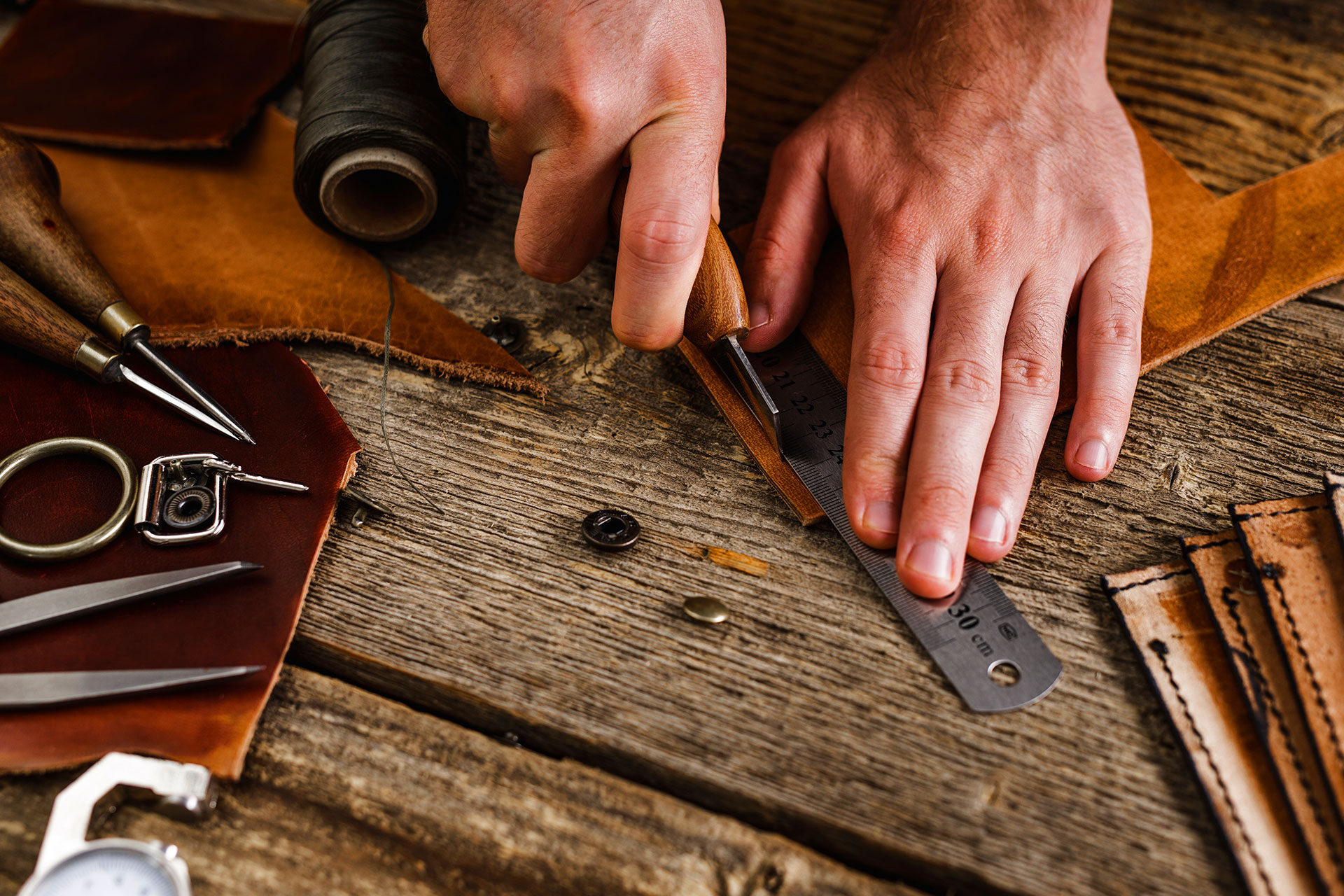
- Steel Rule: A must-have for guiding straight cuts and taking accurate measurements without the flex of plastic rulers.
- Leather Scratch Awl: Used to mark cutting lines or pierce small starting holes. The fine point leaves a subtle, precise impression.
- Silver / White Marking Pen: Ideal for marking dark leathers where a traditional pencil line would be invisible.
- Cutting Mat: A self-healing mat protects your work surface and keeps your blades from dulling prematurely on hard surfaces.
How to Choose the Best Leatherworker Tool for Your Projects
With so many tools available, it can be overwhelming to know where to start or what to prioritize. Here are the key factors that should guide your decisions.
Material and Build Quality
The best leatherworker tools are made from high-carbon steel or hardened steel alloys. These materials hold a sharp edge longer and can be re-sharpened reliably over years of use. Avoid cheap imports with soft metal blades, they dull quickly and become unsafe as they require excessive force to cut.
Handles matter too. Look for solid hardwood, bone, or dense composite handles that are shaped for ergonomic grip. You’ll be spending hours at your bench, and a comfortable tool reduces hand fatigue significantly.
Matching Tools to Leather Weight
Leather is sold by weight or thickness, typically measured in ounces or millimeters. Light garment leather (1–2 oz) requires fine, delicate tools. Medium weight leather (4–6 oz) is the most common for bags and belts and suits a standard toolset. Heavy leather (8–10+ oz) for soles, holsters, and saddles demands heavier-duty punches, chisels, and blades.
Using the wrong tool for the leather weight leads to torn holes, ragged cuts, and broken equipment. Always check the specification of your tools against the leather you plan to work with.
Starter Kit vs. Building a Professional Set
If you’re new to leatherworking, resist the urge to buy everything at once. A well-chosen starter kit, a good cutting knife, a set of stitching chisels, a mallet, needles, thread, an edge beveler, and a hole punch set, is enough to complete a wide range of beginner and intermediate projects.
As your skills grow, you’ll naturally identify the gaps in your toolkit. Buying tools in response to specific project needs is a smarter approach than purchasing a large set of mediocre tools all at once.
Caring for Your Leatherworker Tools
Even the best tools deteriorate without proper maintenance. Building good habits early will extend the life of your entire toolkit and keep your work quality consistently high.
Sharpening and Honing
Cutting tools, knives, bevelers, and chisels, should be sharpened regularly. Use a leather strop loaded with honing compound to maintain the edge between heavier sharpening sessions on a whetstone. A properly stropped blade glides through leather effortlessly and cleanly.
Make sharpening a ritual, not an afterthought. Check your blades at the start of every session and strop them periodically throughout longer work periods.
Rust Prevention and Storage
Steel tools are vulnerable to rust, especially in humid workshops. After each use, wipe your tools down with a clean, dry cloth. A light coating of camellia oil or tool oil on the metal parts provides excellent rust protection without interfering with the tool’s function.
Store tools in a roll, hanging rack, or dedicated tool case where blades are protected from contact with each other. Blade-on-blade contact damages edges and creates safety hazards.
Mallet and Handle Maintenance
Wooden handles can crack over time if they dry out. Occasionally rubbing them with linseed oil or beeswax keeps the wood conditioned and prevents splits. Check mallet heads periodically for looseness, a flying mallet head is a workshop hazard no one needs.
Top Tips for Getting the Most Out of Your Leatherworker Tool Collection
- Always case (dampen) vegetable-tanned leather before carving or stamping for cleaner impressions.
- Use a glass or granite surface plate under your cutting mat for the most precise, clean cuts.
- Practice your stitching rhythm on scrap leather before moving to your final piece.
- Keep a dedicated strop on your bench so sharpening a knife takes seconds, not minutes.
- Label your tool roll or rack so you reach for the right tool without hunting.
- Never rush a cut, slow, deliberate strokes with sharp tools outperform fast, forceful ones every time.
Where Leatherworker Tools Come From: A Brief History
Leatherworking tools have existed in some form for thousands of years. Archaeological evidence shows early humans using sharpened flint and bone tools to process animal hides. As metallurgy advanced, craftspeople developed increasingly refined steel tools tailored to the specific demands of leather tanning, cutting, and decorating.
By the 19th century, specialized tool manufacturers emerged in Europe and North America to serve the booming saddle-making, harness-making, and cobbling industries. Many of the tool designs developed in that era remain essentially unchanged today, a testament to how well they solve the specific challenges of working leather.
American manufacturers, in particular, developed a strong tradition of producing heavy-duty leatherworker tools built for industrial use in saddleries and shoemaking workshops. That heritage of durability and precision craftsmanship continues to inform what quality leather tools look and feel like today.
Common Mistakes Leatherworkers Make With Their Tools
Even experienced crafters develop bad habits over time. Here are some of the most common tool-related mistakes and how to avoid them.
- Cutting on hard surfaces: Using a ceramic tile or bare wood instead of a self-healing cutting mat dulls blades rapidly. Always use an appropriate surface.
- Ignoring sharpness: Continuing to work with a dull tool is the single fastest way to ruin both your leather and your results. When in doubt, strop it out.
- Using the wrong mallet: Metal hammers damage tool heads over time. Always use a wooden, rawhide, or nylon mallet with leatherworking stamps and punches.
- Skipping the groove for stitching: Laying thread on a flat surface invites wear. Always use a stitching groover to recess your thread line.
- Forcing tools through dry leather: Trying to tool or stamp dry leather results in shallow, unclear impressions. Case the leather properly first.
- Buying quantity over quality: A large set of cheap tools is almost always worse than a small set of excellent ones. Prioritize build quality and edge retention.
Building Your Leatherworking Bench: A Functional Setup
A well-organized bench makes you a more efficient and enjoyable craftsperson. You don’t need a large dedicated space, even a sturdy kitchen table can serve as a leatherworking surface with a few additions.
Must-Have Bench Accessories
- Marble or Granite Slab: A smooth, hard surface for cutting and tooling that won’t absorb moisture and is easy to clean.
- Anvil or Thick Steel Plate: Used under your leather when setting hardware like rivets and snaps.
- Good Lighting: Directional task lighting is critical for seeing fine detail in tooling, stitching, and edge finishing.
- Tool Roll or Wall Rack: Keeps tools accessible, organized, and safely stored.
- Strop: Mounted within arm’s reach so you can hone blades without interrupting your workflow.
The Investment Case for Quality Leatherworker Tools
There’s a reason professional leatherworkers are often possessive about their tools. A quality leatherworker tool purchased today can last decades with proper care. The economics are straightforward: spend more once on a well-made tool versus replacing cheaper versions repeatedly over the years.
Beyond cost, there’s the quality of experience to consider. Working with a perfectly balanced, razor-sharp knife that fits comfortably in your hand is a genuinely pleasurable experience. It encourages more time at the bench, faster skill development, and ultimately better finished work.
Professional leather artisans, the people selling handmade wallets, bags, belts, and custom saddlery, rely on their tools not just for quality but for their livelihood. For them, tool selection is a deliberate, researched decision, not an impulse purchase.
Final Thoughts: Equip Yourself to Do Your Best Work
The world of leather craft rewards patience, skill, and above all, the right equipment. Every leatherworker tool on your bench is an investment in the quality of what you create, from the first cut on a fresh hide to the final burnished edge of a finished piece. Start with the essentials, prioritize quality over quantity, maintain your tools consistently, and let your collection grow alongside your skill set.
Whether you’re crafting a simple keychain or a hand-tooled western saddle, the tools in your hands define the results on your workbench. Choose wisely, care deeply for what you own, and your toolkit will serve you faithfully for years to come.