Essential Leather Crafting Tools That Transform Raw Hide Into Stunning Creations
“Whether you’re drawn to the rich aroma of quality leather or fascinated by the timeless appeal of handmade goods, having the right leather crafting tools transforms raw materials into stunning creations. From wallets and belts to intricate bags and custom accessories, the tools you choose directly impact the quality, precision, and enjoyment of your leather working journey.
Essential Leather Crafting Tools for Every Workshop
Building your leather crafting toolkit doesn’t happen overnight, but understanding the fundamental tools helps you invest wisely from the start. Each tool serves a specific purpose in transforming tough hide into beautiful, functional pieces.
Cutting Tools: The Foundation of Precision
Sharp, reliable cutting tools form the backbone of any leather crafter’s arsenal. A quality rotary cutter paired with a self-healing cutting mat allows for clean, straight lines that define professional work. For curved cuts and detailed work, a sharp craft knife with replaceable blades offers unmatched control.
Head knives, also called round knives, represent the traditional choice for serious leather workers. Their curved blade rocks through leather with minimal effort, making them ideal for cutting patterns and trimming edges. Many craftsmen prefer Japanese-style leather knives for their exceptional steel quality and ability to hold an incredibly sharp edge.
Marking and Measuring Tools
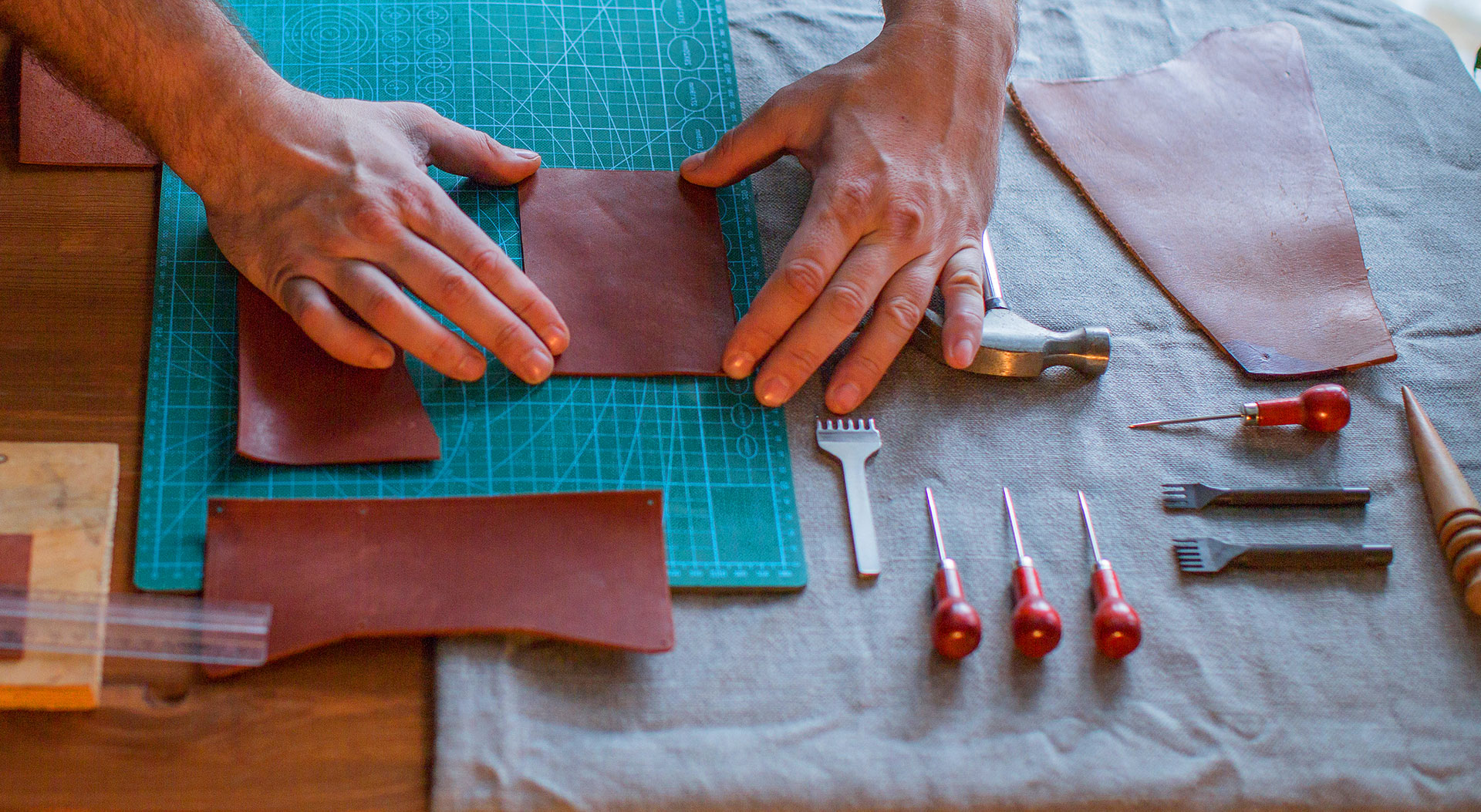
Accuracy begins before the first cut. Wing dividers help maintain consistent distances from edges when marking stitch lines, while scratch awls create precise marks without damaging the leather surface. A quality steel ruler serves double duty as both measuring device and cutting guide.
Pattern-making requires additional specialized tools. French curves enable smooth, flowing lines for bags and accessories, while circle templates ensure perfect rounds for coasters and decorative elements. Clear acrylic rulers allow you to see your work surface while maintaining straight edges.
Stitching and Hole-Making Equipment
Hand-stitched leather goods showcase craftsmanship in every visible stitch. The saddle stitch, leather working’s strongest hand stitch, requires specific tools to execute properly.
Pricking Irons and Chisels
Diamond-shaped pricking irons create evenly spaced holes that guide your stitching needles. Available in various teeth-per-inch configurations, these tools determine stitch length and overall aesthetic. European-style pricking irons create slanted holes for traditional saddle stitching, while Japanese-style options produce straight holes for a different visual effect.
Stitching chisels work similarly but punch completely through the leather, speeding up the process for production work. Quality matters here, poorly made chisels create ragged holes that compromise both appearance and durability.
Needles and Thread
Harness needles, with their blunt tips and large eyes, prevent splitting existing threads while accommodating thick waxed thread. Most leather workers keep multiple sizes on hand, matching needle size to thread thickness and project requirements.
Waxed polyester thread offers superior strength and weather resistance compared to cotton alternatives. Linen thread, while traditional, provides exceptional durability when properly waxed and remains the choice for heritage crafters and restoration work.
Edge Finishing Tools for Professional Results
Raw leather edges betray amateur work faster than any other detail. Professional edge finishing requires specific tools that compress, seal, and polish cut edges into smooth, durable surfaces.
Edge Bevelers and Burnishers
Edge bevelers remove sharp corners from leather edges, creating rounded profiles that feel comfortable and look refined. Available in various sizes, these tools work best when kept razor-sharp through regular maintenance.
Burnishing tools compress and polish leather fibers through friction. Wood burnishers offer traditional functionality, while modern alternatives include canvas wheels for rotary tools and specialized burnishing attachments for drill presses. Each method produces slightly different results, allowing craftsmen to develop signature finishes.
Pro Tip: Edge paint provides an alternative to burnishing for certain leather types. Applied with specialized rollers or pens, edge paint creates consistent, professional finishes on chrome-tanned leathers that resist traditional burnishing techniques.
Specialized Leather Crafting Tools for Advanced Techniques
As skills develop, specialized tools open new creative possibilities. These implements enable decorative techniques and construction methods that elevate your work beyond basic functionality.
Stamping and Carving Tools
Leather stamps create repeating patterns and textures with consistency impossible to achieve freehand. Geometric patterns, basketweave designs, and border stamps allow rapid decoration of large surface areas. Letter and number stamps enable personalization, a valuable service for custom work.
Swivel knives cut decorative lines for tooling and carving projects. Their rotating heads follow curves smoothly, creating flowing designs in dampened vegetable-tanned leather. Bevelers, pear shaders, and backgrounding tools add dimension to carved designs, transforming flat surfaces into three-dimensional artwork.
Skiving and Thinning Equipment
Skiving knives reduce leather thickness in specific areas, essential for creating flat seams and reducing bulk in folded edges. French skivers excel at thinning large areas uniformly, while Japanese leather knives offer precision for detailed work.
Safety skivers provide controlled thickness reduction with minimal risk of cutting through the material entirely. Their adjustable depth settings make them ideal for beginners learning this critical technique.
Setting Up Your Leather Working Space
Efficient tool organization maximizes productivity and protects your investment in quality equipment. When you’re ready to elevate your craft beyond hobby level, establishing a professional workshop where tools feel right in your hand and perform beyond expectations becomes essential for both efficiency and creative satisfaction.
Work Surface Essentials
A sturdy workbench anchors any leather shop. Solid wood construction dampens vibration when punching holes or setting hardware. Many craftsmen add a granite slab or thick cutting mat to protect both tools and bench surface during cutting operations.
Proper lighting prevents eye strain and reveals surface imperfections before they become permanent mistakes. Adjustable task lighting supplements overhead fixtures, eliminating shadows that obscure detail work.
Tool Storage Solutions
Sharp edges require protection, both for safety and tool longevity. Leather or canvas tool rolls keep edge tools organized and protected during storage or transport. Wall-mounted racks display frequently used items within easy reach while protecting cutting edges from damage.
Small parts storage prevents lost time searching for specific stamps, needles, or hardware. Clear plastic organizers allow visual inventory at a glance, while labeled drawers accommodate larger tool collections.
Maintaining Your Leather Crafting Tools
Quality tools represent significant investments that repay proper care with decades of reliable service. Regular maintenance preserves cutting edges, prevents rust, and ensures consistent performance.
Sharpening and Honing
Sharp tools cut cleanly with minimal effort, reducing hand fatigue and improving work quality. Whetstones in progressive grits restore damaged edges, while leather strops loaded with polishing compound maintain razor sharpness between major sharpening sessions.
Different tools require specific sharpening angles. Knives typically need 20-25 degree bevels, while edge bevelers perform best with steeper angles around 35-40 degrees. Consistent angles ensure predictable cutting performance.
Cleaning and Protection
Remove leather residue and adhesives immediately after use to prevent buildup that affects tool performance. Mineral spirits dissolve most leather finishes and contact adhesives without damaging tool steel.
Light oil application prevents rust on carbon steel tools. Many craftsmen prefer camellia oil for its non-toxic properties and pleasant scent. Store tools in climate-controlled environments when possible, humidity fluctuations accelerate corrosion and wood handle deterioration.
Choosing Quality Over Quantity
Beginning leather workers often feel overwhelmed by tool options and conflicting advice about “”must-have”” equipment. Smart purchasing strategies focus on versatile, quality tools rather than accumulating every specialized implement available.
Budget-Friendly Starting Kit
- Rotary cutter and mat
- Steel ruler
- Diamond stitching chisels (6mm spacing)
- Two harness needles
- Edge beveler (size 2)
- Wood burnisher
- Scratch awl
Professional Upgrade Path
- Head knife or Japanese leather knife
- Complete pricking iron set
- Skiving knife and safety skiver
- Electric edge burnisher
- Basic stamp set
- Swivel knife for carving
- Leather thickness gauge
Quality leather crafting tools distinguish serious artisans from casual hobbyists. The right implements not only improve your finished products but also make the creative process more enjoyable and efficient. Whether you’re cutting your first wallet pattern or developing a signature style, investing in proper tools, and learning to use them skillfully, forms the foundation of exceptional leather work. Start with essential cutting and stitching tools, master their use, then gradually expand your collection as specific project needs arise. With proper care and technique, quality leather crafting tools become trusted partners in bringing your creative visions to life.
”